

How to Choose the Right Magnesium Supplement for Sleep and Muscle Recovery
Magnesium is one of the most frequently purchased supplements for sleep quality and muscle recovery—but not all magnesium products are interchangeable. Different formulations are designed for different physiological roles, and misunderstanding those differences often leads to disappointing results.
This guide focuses on how and why specific magnesium formats are used, with added clarity around whole-food–based Standard Process options and how they differ from isolated or specialty magnesium forms commonly used in clinical settings.
Why Magnesium Is Commonly Used for Sleep and Muscle Recovery
Magnesium is involved in hundreds of enzymatic processes, many of which influence how the body relaxes and restores itself. In practical terms, magnesium is commonly used to support:
- Muscle relaxation and recovery after physical exertion
- Nervous system regulation, particularly during stress
- Sleep quality, including difficulty winding down
- Electrolyte balance and neuromuscular signaling
Dietary intake is often insufficient, especially during periods of stress, intense training, or poor sleep. Supplementation is often explored to close that gap—but effectiveness depends heavily on form and context, not just dose.
Why Magnesium Form Matters More Than Total Milligrams
Magnesium must be bound to another compound. That binding partner determines:
- Absorption efficiency
- Tissue distribution
- Digestive tolerance
- Whether the product leans more toward muscle, nervous system, or metabolic support
This is why two products with similar magnesium content can feel completely different in the body.
Understanding Whole-Food vs Isolated Magnesium Forms
Before comparing individual products, it helps to understand two broad strategies used in magnesium supplementation.
Whole-Food–Based Magnesium (Standard Process Approach)
Standard Process formulas rely heavily on food-based mineral complexes, where magnesium is delivered alongside naturally occurring cofactors from plants, algae, or food concentrates. The rationale is that minerals in food matrices may behave differently than isolated salts.
These products often:
- Provide moderate elemental magnesium, not high doses
- Emphasize tissue signaling and mineral balance, not laxative effects
- Include additional nutrients that influence nerve or muscle function
Isolated or Specialty Magnesium Forms
Other professional products use specific magnesium salts or chelates chosen for targeted delivery (e.g., neurological uptake or enzymatic activation). These may provide higher elemental magnesium or unique transport characteristics, but they are typically used more selectively.
Standard Process Magnesium Options: What They Are Designed to Do
Magnesium Lactate (Foundational Muscle & Mineral Support)
Magnesium Lactate provides magnesium in a highly bioavailable salt that has been used for decades.
Why this form exists
- Supports muscle relaxation and recovery
- Plays a role in electrolyte balance and ATP production
- Often well tolerated for daily use
Unlike stimulant-leaning magnesium forms, magnesium lactate is typically chosen for general mineral repletion, muscle tension, and post-exercise recovery rather than sleep-specific effects.

Product link
https://shop.haydeninstitute.com/products/standardprocess-magnesium-lactate-5430
E-Z Mag (Plant-Based, Broad Magnesium Replenishment)
E-Z Mag delivers magnesium through a plant-based concentrate, rather than an isolated salt alone.
Functional rationale
- Designed to help bridge dietary magnesium gaps
- Includes magnesium within a broader mineral and phytonutrient context
- Supports central nervous system health and stress response pathways
This format is often chosen by individuals who prefer food-derived supplementation and want magnesium support without focusing exclusively on sleep or muscle recovery.

Product link
https://shop.haydeninstitute.com/products/standardprocess-e-z-mg-3940
Min-Tran (Nervous System–Focused Magnesium Formula)
Min-Tran is frequently misunderstood as “just another magnesium.” In reality, it is a nervous system–support formula where magnesium is only one component.
Why it’s different
- Combines magnesium with calcium and iodine from whole-food sources
- Designed to support nerve transmission and neurotransmitter balance
- Often used when stress, tension, or difficulty winding down is the dominant concern
Because of its iodine content, Min-Tran is not a high-dose magnesium product and is not intended for aggressive muscle recovery. It is more commonly explored for sleep support related to nervous system signaling, not mineral deficiency alone.

Product link
https://shop.haydeninstitute.com/products/standardprocess-min-tran-5616
Non-Standard Process Magnesium Options (In-Office Only)
Some magnesium products are intentionally not sold online due to manufacturer distribution policies. These are typically used when specific delivery characteristics are needed.
Mg-Zyme (Biotics Research)
General use case
- Focuses on enzyme activation and metabolic support
- Often used in divided doses
- Commonly explored for muscle recovery and cellular energy
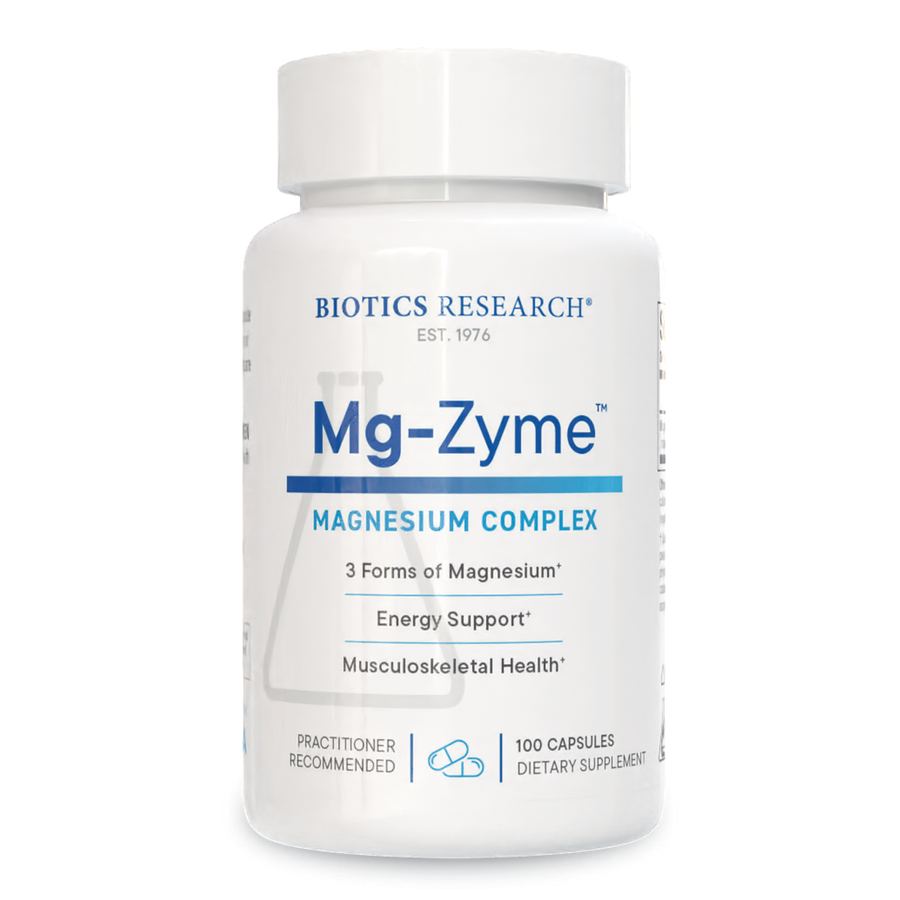
This format is usually selected when standard magnesium products have not produced noticeable effects.
Magnesium Threonate (Ortho Molecular)
Why this form exists
- Designed for enhanced nervous system and brain uptake
- Often discussed in the context of sleep quality and cognitive support
- Typically used in lower elemental magnesium doses

Magnesium threonate is not a general magnesium replacement. It is most often chosen when sleep disruption or mental overstimulation is the primary issue rather than muscle cramping or physical recovery.
Choosing Magnesium Based on Your Primary Goal
If Sleep Support Is the Priority
People shopping for sleep-related magnesium often benefit from:
- Nervous system–oriented formulations
- Lower-dose, signaling-focused products
- Evening-friendly tolerance
Min-Tran, E-Z Mag, or Mag Threonate options are more commonly considered here.
If Muscle Recovery Is the Priority
Those focused on physical performance and recovery often look for:
- Magnesium forms involved in muscle contraction and relaxation
- Products that support ATP and electrolyte balance
- Daytime or post-exercise dosing
Magnesium Lactate or Mg-Zyme are more commonly explored for this use.
Who Should Use Magnesium Cautiously
Magnesium supplementation may require caution for individuals who:
- Experience loose stools or digestive sensitivity
- Have kidney conditions requiring medical oversight
- Combine multiple magnesium-containing products
Starting with lower doses and observing response is generally advisable.
How to Choose the Right Magnesium Product Online
When comparing magnesium supplements, consider:
- Your primary goal (sleep, muscle recovery, stress support)
- Delivery format, not just milligrams
- Whole-food vs isolated mineral strategy
- Tolerance and timing preferences
If you’re unsure which direction fits best, curated product selections or professional guidance can help narrow the choice.
Choosing the right magnesium supplement comes down to understanding why a specific format exists and how it is intended to support the body. Whole-food–based magnesium products may appeal to those seeking foundational mineral support, while specialty magnesium forms are often selected for more targeted nervous system or recovery needs. By aligning the form, timing, and tolerance of magnesium with your primary goal—whether sleep support, muscle recovery, or stress resilience—you can make a more informed and effective choice.
For readers who want to explore the physiology behind magnesium in greater depth, additional educational articles are available on the main Hayden Institute health blog. Those who prefer ongoing, evidence-aware education may also opt into the Hayden Institute email newsletter for periodic updates on nutrition, supplements, and functional health topics.
This content is intended for educational purposes only and does not replace individualized medical guidance.